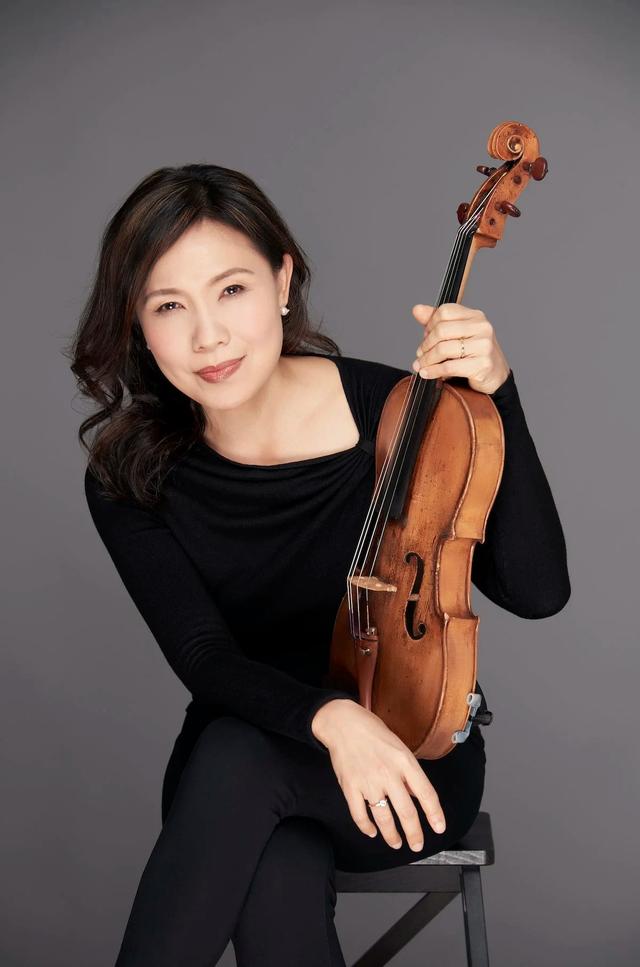
All art forms are like a mirror reflecting our inner selves. We can see this in many artists: from writers to composers, from dancers to musicians, from artists to actors—from the moment they step onto the stage, time seems to stand still, and we, placed center stage, begin to convey the voice of our hearts. Indeed, to achieve excellence, we as artists need to learn to listen to the voice deep within our hearts. Undoubtedly, conveying the thoughts deep within the soul through music is the goal of every musician.
Ancient Chinese culture and thought were deeply versed in the "Six Arts": rites, music, archery, charioteering, calligraphy, and mathematics.
1. **Li (礼):** Etiquette, also known as moral education, encompassing the study of law, management, and communication.
2. **Yue (乐):** Musical performance, popular culture, celebrations, rituals, and spirituality.
3. **She (射):** Archery, often referring to physical activities for self-cultivation, combat skills, and martial arts duels.
4. **Yu (御):** Martial arts or sports culture related to horsemanship or driving.
5. **Shu (书):** Knowledge encompassing reading, writing, literature, art, and philosophy.
6. **Shu (数):** Quantitative methodology and cosmology, encompassing physics, algorithms, and mathematics.
The study of music. Thus, it is evident that music ranks second among the "Six Arts," even being discussed alongside spirituality. This classification and connection is truly fitting! It is precisely this exploration of spirituality that leads musicians to consider how to express essential spirituality, or rather, their own opinions and insights about things. As mentioned above, this guides musicians to explore the true voice deep within their hearts during performances.
String players often use their bodies asymmetrically. Good string playing demands masterful left-hand movements and a musical right arm. It's fascinating to think about how our brains work to allow these two elements to combine appropriately, or rather, to break free from each other's constraints! Too much pressure on the strings with the left hand often leads to too much pressure on the bow with the right, while a stiff right arm usually results in a lack of fluidity in the music, causing stiffness in the neck or left arm. In short, the key to string playing lies in cultivating a sense of flow that originates from within.
I've loved Chinese calligraphy since childhood, practicing for two hours at a time. During these sessions, I often find myself in a state of profound tranquility. I sit down, surrounded by my black inkstone, Xuan paper, and practice books, and diligently begin my practice. The bright window, clean table, and the finest brush, inkstone, paper, and ink all contribute to the meticulous flow. Stroke by stroke, character by character, I work on each line. Practicing calligraphy is one of my favorite extracurricular activities, and my continuous learning has even given me the ability to represent my school in local competitions. Upon reflection, practicing calligraphy requires the practitioner to relax their body, concentrate, and consciously coordinate brushstrokes with breathing. The practitioner's right hand must feel the brush and gradually establish a relationship with it. This relationship is like that of a stringed instrument player and their bow; the player needs to guide the bow slowly and gently, while the bow unconsciously guides the player. Unconsciously, these two hours of calligraphy practice have become a meditative and relaxing time amidst my busy high school curriculum.
If you've ever been exposed to Chinese calligraphy, you'll know that every tiny factor affects the overall result. When grinding ink, the amount of water added and the number of swirls directly impact the ink's density; when dipping the brush tip in ink, one must concentrate intently to determine how much ink to leave. The most difficult part is truly the moment of actually putting brush to paper. Unlike other art forms, success or failure in Chinese calligraphy is determined in the instant the brush touches the paper. If you linger too long, even just half a second, the paper will become soaked, and the characters will become loose and damaged; but if you rush the writing, the strokes will lose their shape and weight. Therefore, once the brush touches the paper, the tip can only follow the direction, creating a sense of each character being written in a single moment.
The biggest taboo in Chinese calligraphy is to alter characters that have already been written! For brush calligraphy, improvement essentially means filling in unsatisfactory shapes with ink, often to no avail. Therefore, in calligraphy, the entire process requires the writer to plan the structure of the characters in advance, preparing the appropriate speed and rhythm for each stroke to achieve a smooth flow. This demands complete concentration from the creator every time they pick up the brush. When to go fast, when to go slow, when to pause precisely, how to subtly "reveal" or "conceal" the brush tip at the end of a stroke—all these aspects become art. Therefore, I greatly enjoy watching masters create: they often require immense patience and undivided attention during creation; even in those moments of focused concentration, time seems to stand still. They often have a thorough understanding of brush techniques, their strokes flowing effortlessly. Thus, I often immerse myself in appreciating calligraphy works, finding endless joy in it, because these works convey energy, spirituality, and wisdom.
There are many similarities between calligraphy and string performance; both require activating the "eye of the soul" and "spiritual contemplation." By strengthening our "eye of the soul," we visualize and practice brushstrokes before putting pen to paper. Through contemplation and meditation, we grasp the spiritual aspect of both calligraphy and music. Calligraphy beginners must repeatedly practice dot and horizontal strokes before learning more complex characters. Dot and horizontal stroke training refers to the literal meaning of each stroke—a dot and a horizontal line—forming the character "一" (one). This is similar to playing the violin; we first need to feel the strings to produce sound, then tirelessly practice open strings to cultivate the right hand's sense of line and fluidity, finally adding the left hand. The modern Western bow originated in the Byzantine Empire in the mid-5th century; these primitive bows were convex.
Like a bow and arrow. During the Baroque period, with further development of playing techniques, the performer's need for bow control increased, leading to improvements in bow structure. In terms of bowing techniques, the commonly used terms today are "upbow" and "downbow." The French, however, often use "pousser" to represent an upbow and "tirer" to represent a downbow. These terms are highly evocative; when we imagine pushing and pulling, we can feel the weight of the sound. Writing calligraphy shares a similar principle with bowing. When writing, the push and pull of the brush tip can be understood and felt in both lifting and pressing. Only in this way can calligraphers feel as if a thousand troops are at their command when writing, creating flowing, dynamic strokes.
The Chinese proverb "calligraphy reflects the person" means that one can glean insights into a person's character from their calligraphy. Firstly, when the heart and brush are in harmony, calligraphy gains a soul, conveying the artist's inner voice. Isn't music the same? Music, too, reflects the person. We've all had the experience of instantly associating a performance with a particular musician. Hearing a voice from the heart is often incredibly powerful, possessing an indescribable quality—it can be expressive, full of love and joy, or humorous; it can also be melancholic or filled with gratitude. But all these convey the most touching quality—a deep-seated vulnerability. Indeed, genuine emotions are undeniable on stage; under the spotlight, we pick up our pens and create our own musical calligraphy.