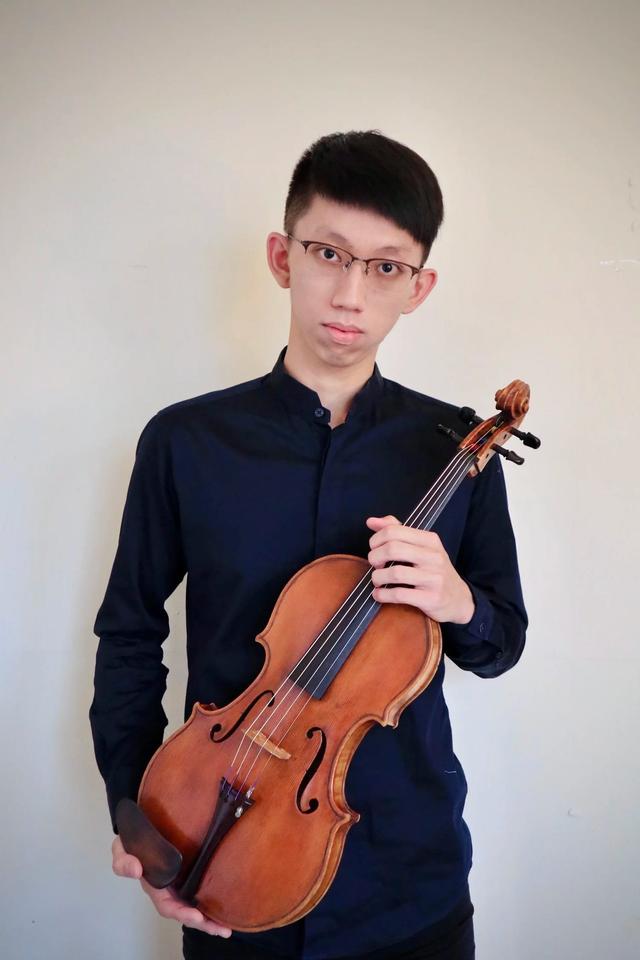
Guest Contributor: Chen Zhida, translated by Cai Ningqian
Everyone has a different definition of failure. Some people think that as long as the process is good, it's not a failure, while others believe that not being number one is a failure. Regardless of our definition of failure, it's undeniable that we will experience many setbacks on the road to learning joy. I want to share my emotional journey over the years with everyone.
"Good is good." - As our teacher, Mr. Xin Yun, once told us, the outcome of a match doesn't change the fact that we played well. A great player won't become worse just because they didn't advance to the next round; similarly, an unprepared player won't be affected by the judges' favor. Former world number one tennis player, Lee Chong Wei, won countless championships in his 19-year career, but ironically, he didn't win a single medal at the most important Olympics.
However, if people only judge a sports player based on the Olympics, the most important sport, he might seem unremarkable. But clearly, that's not the case. (Lee Chong Wei held the world number one ranking for men's singles for 349 weeks, the longest record in sports.) Therefore, we shouldn't give up our motivation or doubt ourselves because of a few setbacks. Often, when we look back, those painful and regrettable failures are merely stepping stones to great success.
From a young age, I wasn't a particularly talented or skilled student. From city-level competitions in elementary school to national competitions before going abroad, almost none of my results were "successful." Meanwhile, I had many outstanding friends who had smooth sailing and consistently ranked first. From an outsider's perspective, looking at my efforts and the results of these competitions, I would feel sorry for Chen Zhida. However, as Chen Zhida himself, I never wanted to give up because of these "failures." I also felt sadness and...
Getting tired is perfectly normal. I'm someone who can practice the piano incredibly hard; I used to practice for more than seven hours a day, sleeping only four hours, all to pursue my dream. Even though that dream didn't come true, I still grew a lot because of the effort I put into preparing. Although in terms of results I might just be constantly "failing," in terms of content, I've been constantly growing and maturing. Every failure is a learning experience.
There can only be one number one. Before learning how to "succeed," we should learn how to accept "failure." Sometimes we can't accept setbacks because we care too much about what others think. "OOO is sad that he didn't make it to the national competition because another friend did..." "OOO's mother said her son got into Curtis Institute, and those who didn't are not good enough..." As we slowly climb to positions we couldn't reach before, we can easily see that what others said, and what we once cared so much about, was nothing but laughable nonsense. Broaden your perspective, humbly examine yourself, and turn all negative energy into motivation.
I am not a "successful" person today, nor am I sharing my "path to success". But I would like to share with you how I turned countless setbacks into strength and continued to move forward on the path of music.
Chen Chih-Ta, born in Kaohsiung City, began learning music at the age of five, studying under Chen Yung-Chan, Lin Chieh-Yu, Wang Yi-Chen, and Mai Motobuchi, among others. He graduated from National Tainan National University of the Arts and at 19 went to the New England Cinservatory of Music in the United States for further studies. During his time there, he received numerous scholarships and participated in school competitions. He and his string quartet, the Nico Quartet, were selected for the NEC 2018-2019 Honor Ensemble and received the Borromeo String Quartet Guest Artist Award, performing with the Borromeo Quartet at Jordan Hall. In 2019, he participated in Kneisel Hall, in 2020 Four Seasons, and in 2021, the Taos Chamber Music Festival, all with full scholarships. Currently, he is studying at the Curtis Institute of Music in the United States on a full scholarship, studying with Professors Hsin-Yun Huang and Roberto Diaz.